Wound Care Resources

Expert Wound Care Articles, Guides & Resources

These guides cover what to expect while a wound is healing, how to look after one at home, and when a change is worth reporting to a clinician. If you are looking for treatment rather than reading, our care is organized into five areas: chronic wound treatment for ulcers and injuries that have stopped healing, advanced wound care for wounds that have not responded to standard treatment, surgical wound care for incisions after an operation, mobile and home health wound care for visits wherever you are living, and wound care education for patients and caregivers managing a wound day to day.

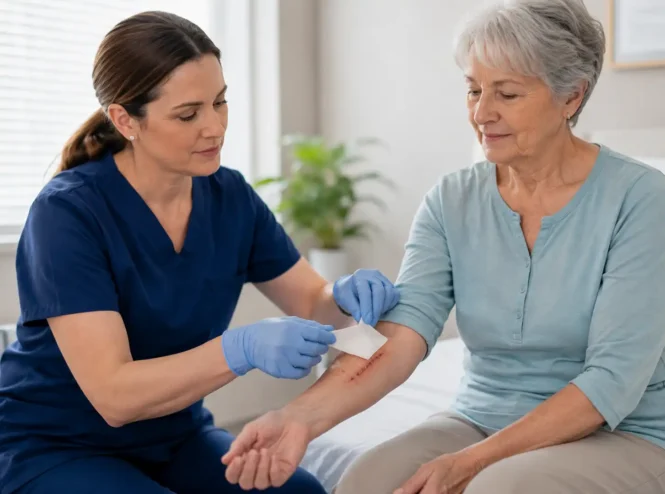
Nurse removing a dressing from an older woman’s healing forearm, showing when to stop covering an open wound once the skin has closed.

When to Stop Covering an Open Wound: 6 Signs It Has Closed

Knowing when to stop covering an open wound comes down to one question: has new skin closed the…

Nurse assessing an older patient’s heel and mobility in bed as part of a Braden scale pressure injury risk evaluation.

Braden Scale Scores: What Each of the 5 Risk Levels Reveals

A Braden Scale score is a number between 6 and 23 that estimates how likely a person is…
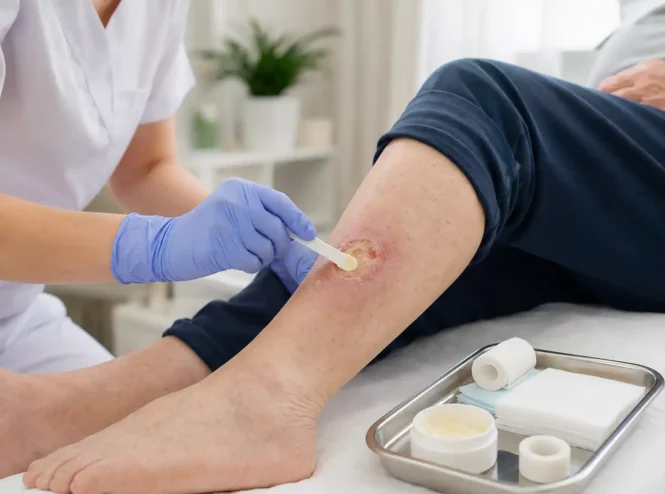
Clinician applying ointment during **enzymatic debridement** to help remove dead tissue from a lower-leg wound.

Enzymatic Debridement: What Collagenase Does and 6 Mistakes

Enzymatic debridement is the clearing of dead tissue from a wound with a prescription ointment, spread on the…
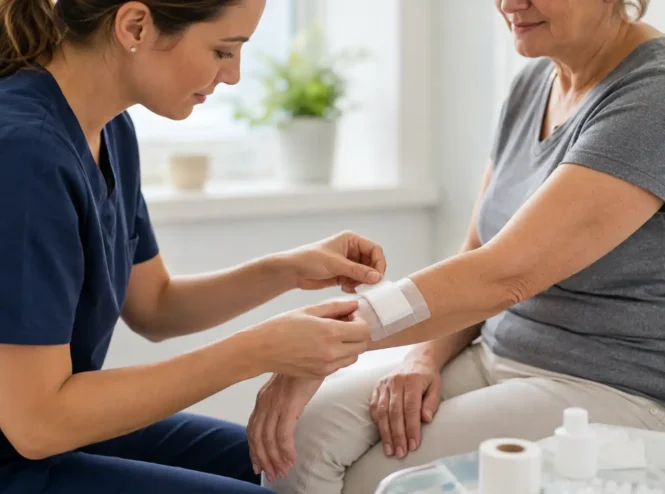
Nurse applying a clean dressing to an older woman’s forearm during wound care, addressing the question “should a wound be covered” for safe healing.

Should a Wound Be Covered? 6 Rules and the Air Myth

Should a wound be covered or left open to air? Covered, in almost every case. The idea that…
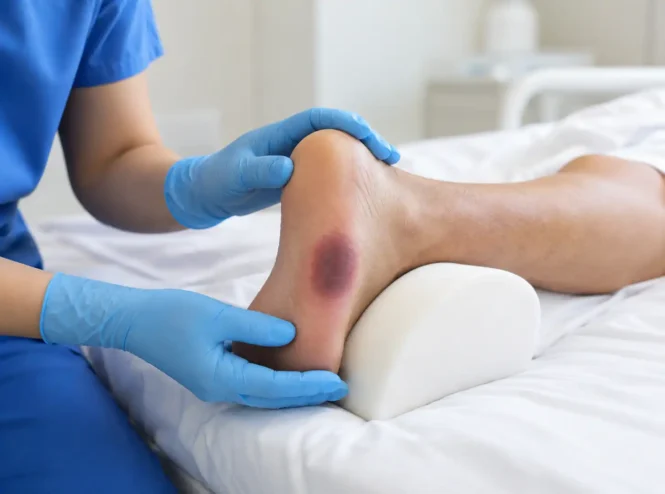
Clinician examining a patient’s heel with dark red-purple discoloration consistent with a **deep tissue pressure injury**.

Deep Tissue Pressure Injury: 4 Signs Under Intact Skin

A deep tissue pressure injury is pressure damage that begins at the bone and works outward, which is…

Older man resting comfortably on a **pressure relief mattress** designed to reduce pressure during extended bed rest.

Pressure Relief Mattress or Cushion: 6 Checks Before You Buy

A pressure relief mattress is chosen by how much risk the person is under and how little they…
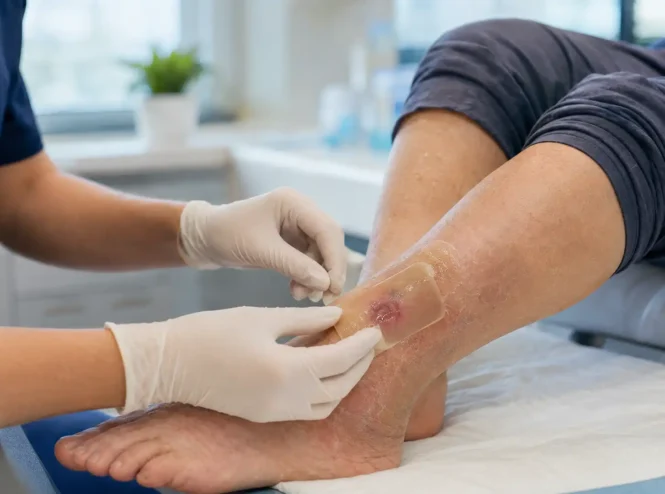
Clinician applying a moisture-retaining wound dressing to a patient’s lower leg during gentle autolytic debridement treatment.

Autolytic Debridement: How It Works and 5 Clear Signs of Progress

Autolytic debridement is the body clearing dead tissue out of a wound on its own, using enzymes and…

Older woman resting in an adjustable bed as part of a pressure-relief care routine showing **how to prevent bedsores**.

How to Prevent Bedsores: 6 Practical Steps for Caregivers

How to prevent bedsores comes down to a single idea applied relentlessly: no patch of skin should carry…
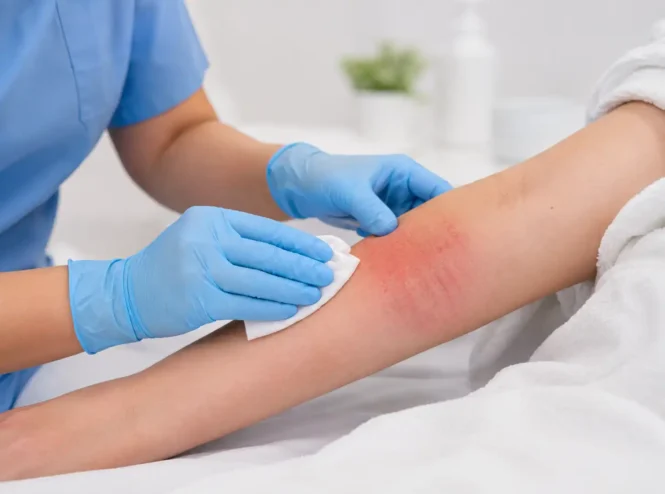
Healthcare professional gently cleaning irritated skin on a patient’s arm affected by **moisture associated skin damage**.

Moisture Associated Skin Damage vs Pressure Injury: 3 Clear Signs

Moisture associated skin damage is skin worn down by staying wet, and it is the thing most often…
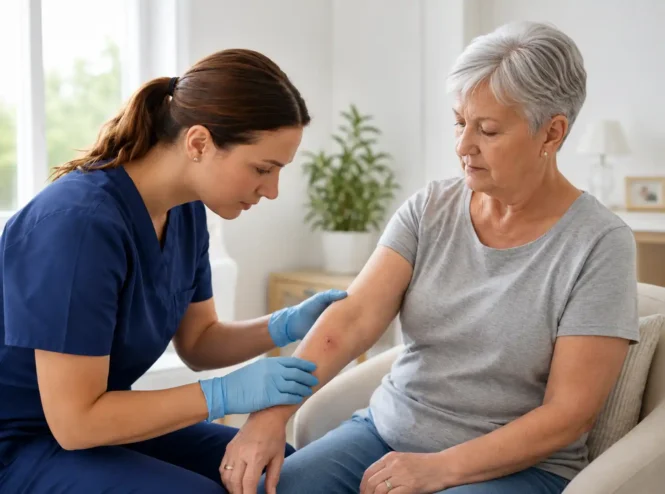
Nurse examining redness and swelling around an older woman’s forearm wound, showing how to tell if a wound is infected by checking for visible changes.

How to Tell If a Wound Is Infected: 7 Signs to Check

How to tell if a wound is infected comes down to a question no single glance can answer:…

Compassionate nurse caring for a patient with an **Unstageable Pressure Ulcer** while he rests on his side in a hospital bed.

Unstageable Pressure Ulcer: Why Stage 3 or 4 Stays Hidden

An unstageable pressure ulcer is a wound whose base is buried under dead tissue, so nobody can see…

Person lying on their side in bed with a hand resting on the hip area, illustrating body positioning and pressure points associated with Pressure Ulcer Stages and pressure injury prevention.

Pressure Ulcer Stages 1 to 4: What Each Stage Means

Pressure ulcer stages describe one thing: how far down the damage goes. Stage 1 is skin that is…

Charcot Foot in Diabetes Signs, Stages and Treatment

Charcot Foot in Diabetes: Signs, Stages and Treatment

Charcot foot is a complication of diabetic nerve damage in which the bones and joints of the foot…

Compression bandage being applied over a venous leg ulcer above the ankle

Venous Leg Ulcer: What Causes It and How Long Healing Takes

A venous leg ulcer is an open sore on the lower leg caused by pressure building up inside…

Healthcare professional performing an ankle-brachial index test on a patient using blood pressure cuffs and a handheld Doppler probe.

Ankle-Brachial Index: What Your Result Means for Healing

A normal ankle-brachial index runs from 1.00 to 1.40. At 0.90 or below, the arteries feeding that leg…

Close-up of an older adult’s foot showing a small arterial ulcer on the outer foot, with dry skin and visible veins.

Arterial Ulcers and Ischemia: When Blood Flow Is the Problem

An arterial ulcer is a wound that stays open because too little blood is reaching it. The skin…

Clinician examining an older patient’s lower-leg wound while assessing possible **leg ulcer types** and the surrounding skin.

Leg Ulcer Types: Telling Venous, Arterial and Diabetic Apart

Leg ulcer types come down to three common causes: veins that no longer move blood out of the…

Clinician examining the sole of a patient's foot, with a small round ulcer visible under the ball of the foot

Diabetic Foot Ulcer Stages: A Clear Guide to Grades 0 to 5

Diabetic foot ulcer stages are almost always the Wagner grades, a scale running from 0 to 5 that…
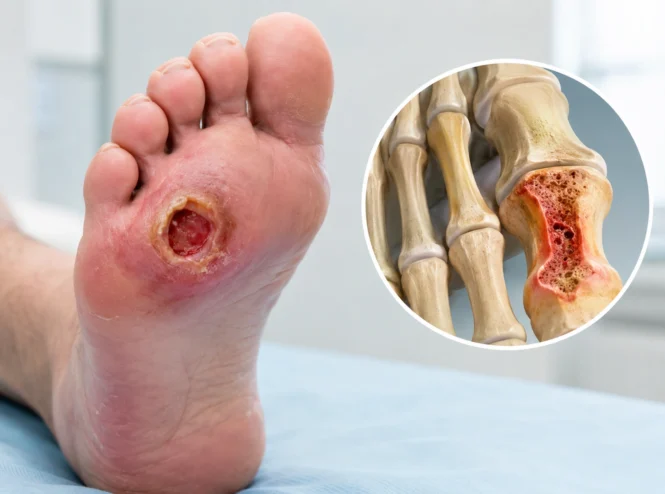
Medical illustration showing signs a foot ulcer has reached the bone, with a deep ulcer on the sole of the foot and an inset view of underlying bone involvement suggestive of osteomyelitis.

Osteomyelitis Foot Ulcer: Signs a Wound Has Reached the Bone

An osteomyelitis foot ulcer is a foot wound where infection has traveled out of the soft tissue and…
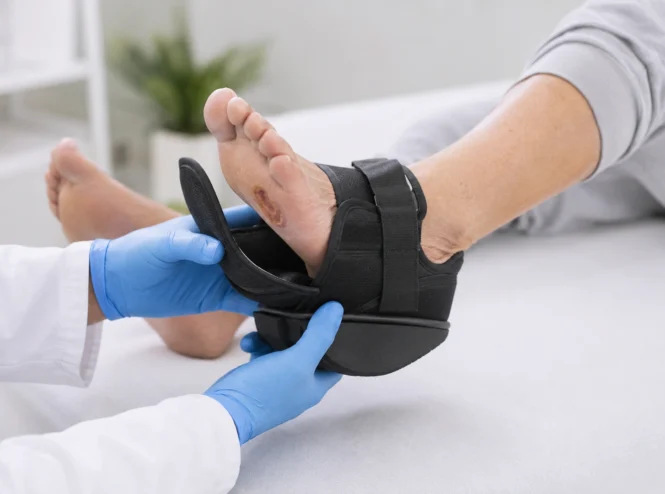
Healthcare professional fitting an offloading boot on a patient with a foot ulcer, illustrating offloading diabetic foot ulcer treatment to reduce pressure on the wound and support healing.

Offloading Diabetic Foot Ulcers: Why Pressure Relief Decides Healing

A plantar diabetic foot ulcer is a pressure injury that happens to be open. Here is what offloading…
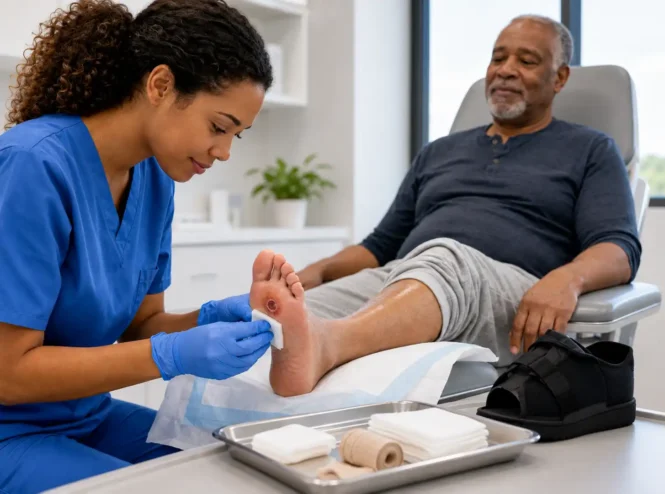
Clinician providing diabetic foot ulcer treatment Fayetteville GA by cleaning and dressing an older patient’s foot ulcer during a wound care visit.

Diabetic Foot Ulcer Treatment Fayetteville GA: Care Delivered 3 Ways

Diabetic foot ulcer treatment in Fayetteville GA means five jobs running at once: taking weight off the wound,…
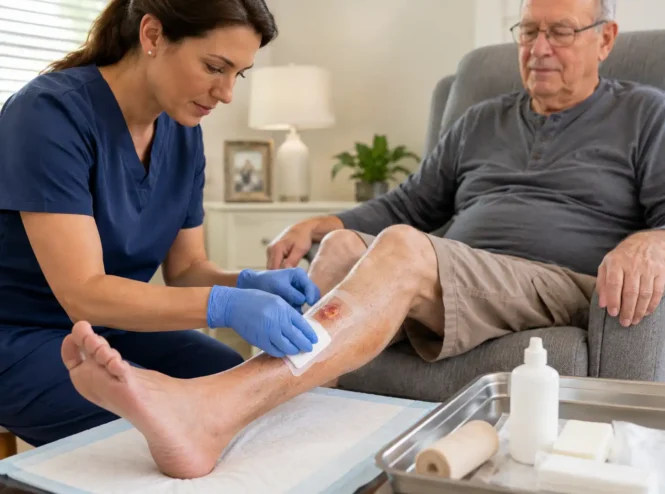
Nurse providing Medicare Part B wound care Georgia services by cleaning and dressing an older patient’s lower-leg wound during an in-home visit.

Medicare Part B Wound Care Georgia: 2 Benefits, Local Rules

Medicare Part B wound care Georgia patients qualify for pays for the same services here as it does…

Clinician providing mobile wound care Fayetteville GA by applying a clean bandage to an older patient’s forearm during a professional wound care visit.

Mobile Wound Care Fayetteville GA: 6 Things a Clinic Never Sees

Mobile wound care Fayetteville GA patients arrange sounds like a convenience, and it is one. No drive, no…
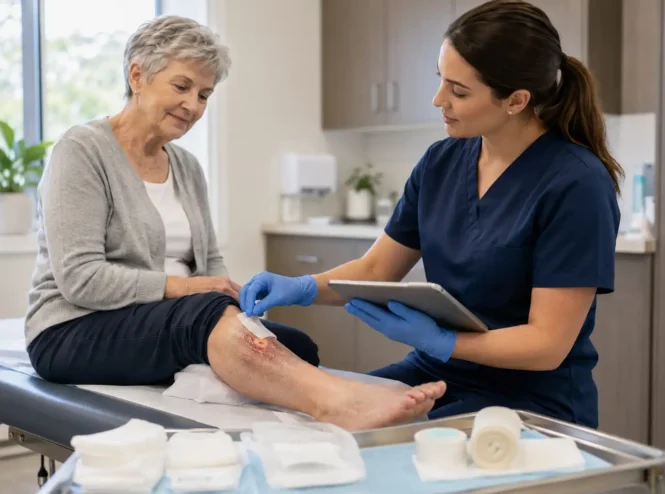
Nurse providing wound care covered by Medicare Part B while assessing and dressing an older woman’s lower-leg wound in a clinical setting.

Wound Care Covered by Medicare Part B: The 80/20 Split Made Simple

Wound care covered by Medicare Part B reaches further than most people expect. Office visits, wound assessment, debridement,…
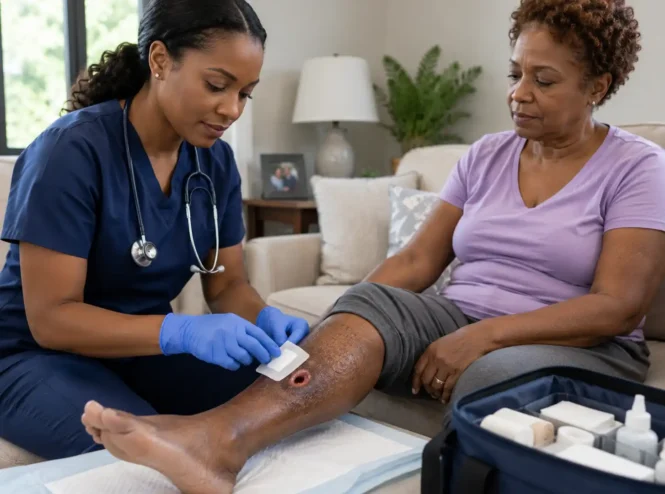
Nurse providing wound care for dark skin while cleaning and dressing an older woman’s lower-leg wound during an in-home assessment.

Wound Care for Dark Skin: 6 Steps a Safe Visit Never Skips

Are mobile wound care services safe for melanin-rich skin? Learn how specialized in-home wound care providers address unique…